Yuhang Tian 田宇航

Beijing Institute of Technology · Meituan LongCat foundation-model team

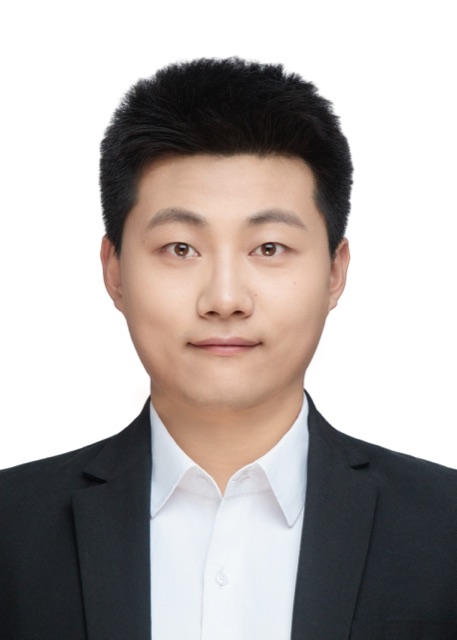
Portrait of Yuhang Tian

I am a Ph.D. student in Computer Science at Beijing Institute of Technology, advised by Prof. Dandan Song. I also work on LLM post-training with Meituan's LongCat foundation-model team.

My research asks how a model's failures can become its next training signal. I build systems that locate the first consequential error, verify outcomes with executable feedback, and assign learning credit to the decisions that caused the failure. This connects my work on production post-training loops, verifiable reinforcement learning, structured reasoning, and self-improving agents.

Research Four connected threads

01Learning from failures

Deployed models produce a stream of supervision that is both honest and underused: their own failure traces. I built a Bad Case Auto-Remediation loop that discovers recurring failures, identifies the first error, synthesizes graders and repair data, launches training, and runs targeted and general regressions. A related project, Zero Auto Harness, holds the base model fixed and instead lets its tools and middleware improve from execution feedback.

02Verifiable rewards and credit assignment

Once correctness can be checked by a program, the hard question becomes which decision deserves the credit. In ToolAgent-RL, I decomposed multi-turn tool-use trajectories into 6,498 state-action decisions and built executable rewards for protocol validity, tool routing, and argument accuracy. My post-training work uses token-level advantage masks to focus sequence-level feedback on attributable errors and preserve correct spans during optimization.

03Executable structured reasoning

Rather than asking a model to emit an answer directly, I study intermediate structures that an executor can inspect. This line includes CompKBQA for component-wise reasoning and retrieval, GRV-KBQA for decoupled generation, grounding, and validation, and SELF-KBQA for structure-aware subgraph retrieval and token-budgeted evidence condensation.

04Model-internals diagnostics

I also use internal representations to test whether a behavioral result reflects the mechanism we think it does. My work studies hallucination signals in deep representations and uses probing to connect layer-wise features with downstream predictions.

Experience Research and systems

Meituan · LongCat foundation-model team

– Present

Research Engineer · LLM post-training

Bad Case Auto-Remediation End-to-end lead

Designed and shipped a closed loop from production failure discovery and first-error localization to repair-agent data generation, automatic graders, token-level advantage masks, training, and regression evaluation. A single failure type can be repaired from as few as 8 automatically mined examples.

Pure-JSON compliance improved from 77.53% to 99.78%; explicit and implicit Markdown-fence cases improved from 34.29% to 77.96% and 55.56% to 88.89%. The target failure share fell from 39.5% to 2.0%; masking added roughly 7 percentage points on the targeted metric while the nine-task general macro average held steady (61.19% to 61.33%).

Zero Auto Harness

Helped build a two-agent work/evolve loop that improves tool implementations and middleware from execution traces while keeping the base model fixed. Added cross-task generalization constraints and held-out re-evaluation to reduce benchmark memorization. With GPT-5.4 fixed, five evolution rounds raised SWE-bench Verified 500-task Pass@1 from 51.8% to 61.0%.

Shanghai Wendi Asset Management (上海文谛资产管理)

LLM Research Engineer · Quantitative research

Research agents with executable feedback

Built a multi-agent workflow spanning strategy generation, sandboxed code execution, and automatic backtesting. Backtest outcomes served as verifiable feedback for selecting and iterating proposed alpha factors—my first production setting where execution could replace manual labels.

NLP factors and retrieval systems

Led research-report summarization and market-sentiment factor modeling, addressing long-context truncation, class imbalance, entity-name leakage, and factor collinearity before production deployment. I also built RAG systems with semantic chunking, hybrid dense/sparse retrieval, Milvus, LLM reranking, and evidence attribution.

Education Beijing Institute of Technology

Beijing Institute of Technology

Ph.D. student in Computer Science · Advisor: Prof. Dandan Song

– Expected

BIT Graduate Special Scholarship · Outstanding Student

Beijing Institute of Technology

B.Eng. in Computer Science

ACM-ICPC Asia Regional Silver Medal · GPLT Silver Medal · National Endeavor Scholarship

Publications Selected and complete list

13 papers, including 4 first- or co-first-authored papers. See also Google Scholar.

First and co-first authored

Subgraph-Guided Executable Logical Form Generation for Knowledge Base Question Answering

Yuhang Tian, Dandan Song, Zhijing Wu, et al.

ACL 2026 · First author

SELF-KBQA retrieves structurally aligned subgraphs, condenses them under a token budget, and generates executable logical forms.

CompKBQA: Component-wise Task Decomposition for Knowledge Base Question Answering

Yuhang Tian, Dandan Song, Zhijing Wu, et al.

EMNLP 2025 · First author

A component-wise framework that learns skeleton, entity, relation, and logical-form subtasks and retrieves knowledge dynamically with R³.

GRV-KBQA: A Three-Stage Framework for Knowledge Base Question Answering with Decoupled Logical Structure, Semantic Grounding and Structure-Aware Validation

Yuhang Tian, et al.

EMNLP 2025 · Co-first author

Separates structure generation, semantic grounding, and validation; structure-aware filtering removes 90% of invalid candidates.

Augmenting Reasoning Capabilities of LLMs with Graph Structures in Knowledge Base Question Answering

Yuhang Tian, et al.

EMNLP 2024 · First author

Combines an unsupervised two-stage ranker with multi-hop graph beam search, improving GrailQA zero-shot performance by 8.1 EM.

Co-authored

A Fact-Checking Framework with Denoising Evidence Retrieval and LLM-Based Debate Verification

WWW 2026

Multi-Hop Knowledge Editing via Critic-Guided Multi-Agent Reasoning

ACL 2026

Static Models, Dynamic World: A Unified Perspective on Temporal Perception in Large Language Models

ACL 2026

ActiShade: Activating Overshadowed Knowledge to Guide Multi-Hop Reasoning in Large Language Models

AAAI 2026

Path-enhanced Pre-trained Language Model for Knowledge Graph Completion

EMNLP 2025

Detecting Hallucination in Large Language Models Through Deep Internal Representation Analysis

IJCAI 2025

A Framework of Knowledge Graph-Enhanced Large Language Model Based on Question Decomposition and Atomic Retrieval

EMNLP 2024

Span-Pair Interaction and Tagging for Dialogue-Level Aspect-Based Sentiment Quadruple Analysis

WWW 2024

A Framework of Knowledge Graph-Enhanced Large Language Model Based on Global Planning

IEEE Transactions on Knowledge and Data Engineering
Service & More Community and collaboration

Area Chair
ACL Rolling Review · ARR team member
Reviewer
ACL · EMNLP · NAACL · NeurIPS · AAAI · CIKM · CCKS · KBS · ESWA
Community
Student Committee Member, MLNLP
Methods
GRPO and RLHF post-training · Multi-turn tool-use agents · Verifiable reward design · Large-scale evaluation and regression · Hybrid retrieval · SAE and probing analysis
Blog
GuguMelon's Blog collects technical notes and essays since 2018; it is mostly in Chinese.
Collaborate
I welcome conversations and collaborations on credit assignment in post-training, self-improving agents, and verifiable rewards.